Anxiety can arrive like a false alarm in the body. The heart races, breathing tightens, thoughts speed up, and the mind starts searching for danger even when none is obvious.
The aim is not to “switch off” anxiety by force. That usually makes it louder. The aim is to send the body enough safety signals that the alarm begins to settle.
This guide shares 10 evidence-based ways to reduce anxiety quickly, with practical reflections from lived experience. It is informational only and not a substitute for support from a qualified health professional, especially if anxiety feels severe, frequent, or linked to panic, trauma, or thoughts of harm.
Explore this article:
- Why anxiety feels so physical
- 10 evidence-based ways to calm anxiety quickly
- How to work with anxious thoughts
- What lived experience teaches about calming anxiety
- A simple plan for the next anxious moment
- Getting more support
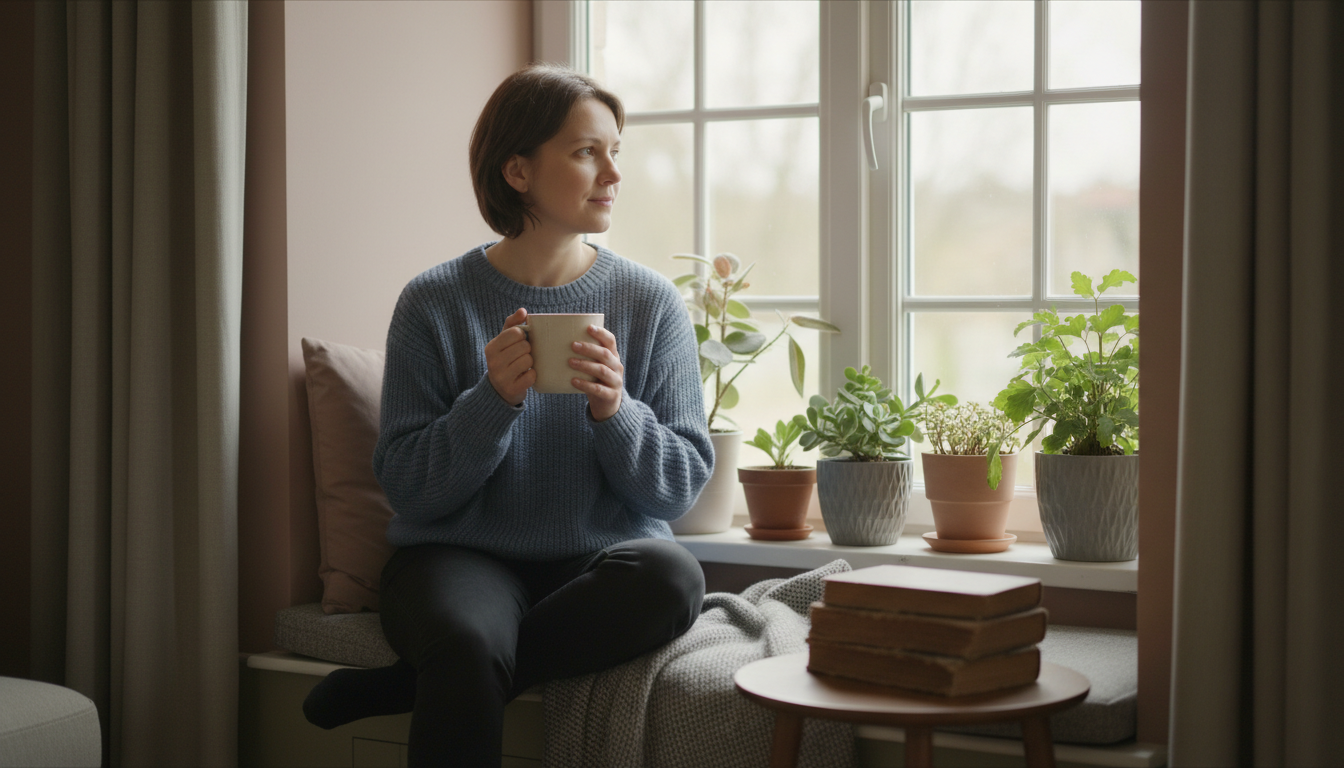
Why anxiety feels so physical
Anxiety is not “just overthinking”. It is a full-body response. Muscles tighten. Breathing changes. The stomach may churn. The brain starts scanning for what could go wrong.
That is why fast anxiety relief often works best through the body first. Once the body calms, the mind usually becomes easier to reason with.
A useful lived experience reflection is this: during anxiety, thoughts often feel urgent, but urgency is not the same as truth. The body may be shouting, while the facts are quieter.
10 evidence-based ways to calm anxiety quickly
1. Slow the exhale
Breathing slowly can help the body move out of alarm mode. The simplest version is to breathe in gently through the nose, then make the breath out slightly longer.
Try this for one minute:
- Breathe in for 3 counts
- Breathe out for 5 counts
- Keep the shoulders loose
- Repeat without forcing a deep breath
The longer exhale is the key. It tells the body, “I am not running from danger right now.”
2. Name what is happening
Say, quietly or in your head, “This is anxiety. It feels intense, but it will pass.”
Labelling the experience helps create a little distance from it. Instead of becoming the fear, you are observing it. That small shift can reduce the sense of being trapped inside the feeling.
A lived reflection: the first time this works, it may not feel dramatic. It may simply stop the spiral from getting worse. That still counts.
3. Use the 5, 4, 3, 2, 1 method
This is one of the most practical grounding techniques for anxiety because it brings attention back to the present.
Notice:
- 5 things you can see
- 4 things you can feel
- 3 things you can hear
- 2 things you can smell
- 1 thing you can taste
Do it slowly. The point is not to complete a task. The point is to remind the brain that this moment is real and manageable.

4. Drop your shoulders and unclench your jaw
Anxiety often hides in the muscles. Check the jaw, tongue, shoulders, hands, and stomach.
Try this:
- Let the tongue rest low in the mouth
- Lower the shoulders
- Open and close the hands once
- Soften the belly slightly
This sounds small, but the body listens to posture. A rigid body can feed anxious thoughts. A softened body can help interrupt them.
5. Put both feet on the floor
Sit or stand with both feet flat. Press gently into the ground. Notice the support underneath you.
This helps when anxiety feels floaty, unreal, or overwhelming. It gives the nervous system a clear physical point of reference.
A useful phrase is, “I am here. My feet are on the floor. This moment is difficult, but I am supported.”
6. Move for two to five minutes
Movement helps use up the extra energy anxiety creates. You do not need a workout. Try:
- Walking around the room
- Stretching the calves
- Shaking out the hands
- Climbing the stairs once
- Stepping outside for a short walk
Research broadly supports movement as a way to ease anxiety over time, and even brief movement can help in the moment. If sitting still makes the anxiety louder, move gently.
How to work with anxious thoughts
Fast tools are useful, but anxiety often returns if the mind keeps feeding the alarm. The next methods focus on the thought loop.
7. Ask what is fact and what is fear
Write down the anxious thought in one sentence. Then ask:
- What do I know for certain?
- What am I assuming?
- What would I say to a friend with this thought?
- What is the next small useful action?
This is not about forced positivity. It is about accuracy. Anxiety often speaks in extremes: “always”, “never”, “everyone”, “nothing will work”. A calmer mind uses more balanced language.
8. Reduce stimulation
When anxiety is high, the brain has less room for noise, bright screens, arguments, caffeine, and constant checking.
For 10 minutes, try lowering the load:
- Dim harsh lights
- Put the phone out of reach
- Drink water
- Step away from news or messages
- Sit somewhere quieter if possible
This is a direct answer to how to reduce anxiety in a real-life setting. Sometimes the fastest change is removing fuel from the fire.
9. Do one contained task
Anxiety can make everything feel huge. A contained task gives the mind a beginning and an end.
Choose one:
- Wash one cup
- Fold five items of clothing
- Make the bed
- Put shoes by the door
- Reply to one simple message
Small completion builds a sense of control. It also reminds the brain that life is still moving, even while anxiety is present.
10. Reach for safe connection
Anxiety often grows in isolation. A short message can help:
“I’m feeling anxious. I don’t need fixing, but could you stay with me for a few minutes?”
The right support is calm, steady, and non-judgemental. If anxiety is frequent or limiting daily life, speaking with a GP or qualified therapist can be a strong next step.
Learning how to stop anxiety does not mean never feeling anxious again. It means building skills that reduce its power and shorten its stay.
What lived experience teaches about calming anxiety
The most helpful lesson is that anxiety recovery is usually built through repetition, not one perfect technique.
Some days, breathing helps. Other days, movement works better. Sometimes the win is simply not arguing with every anxious thought. Progress may look like:
- Recovering in 20 minutes instead of two hours
- Asking for support sooner
- Recognising the first signs earlier
- Trusting that the feeling will pass
When asking how to calm anxiety, the answer is rarely one grand solution. It is a set of small, reliable actions practised often enough that the body starts to believe them.
A simple plan for the next anxious moment
Use this three-step plan when anxiety rises:
- Calm the body Slow the exhale, relax the jaw, and place both feet on the floor.
- Ground in the present Use the 5, 4, 3, 2, 1 method or notice one solid object nearby.
- Take one small action Move gently, reduce stimulation, write one thought down, or contact someone safe.
Anxiety can feel convincing, but it is also changeable. Give the body safety, give the mind facts, and give yourself time. The feeling does not have to disappear instantly for you to be handling it well.
Getting more support
These ideas are a useful stating point to reduce anxiety quickly in the moment. Sometimes, anxiety becomes an unhelpful pattern and we feel stuck in an anxious loop. When this happens, it might be helpful to seek support to help you work on reducing anxiety safely with a trained professional.
Dr Kayleigh Darch is a HCPC-registered Clinical Psychologist offering confidential, supportive and effective online therapy to people living in Devon and across the UK. If you're considering therapy, then you might like to find out more about: online therapy, the therapeutic approach, and Kayleigh's background and skills.
If you're interested in working with Kayleigh, get in touch to start the process today. You can book a free 15-minute consultation to talk about how you might work together and what you hope to achieve in therapy.
If you're struggling with anxiety, then you might be interested in our article explaining why anxiety can appear from nowhere.
Thank you for reading.