Anxiety often feels louder when the world goes quiet. The same worry that stayed in the background during the day can feel urgent at night, then appear again the moment you wake. This can be unsettling, especially when nothing obvious has changed.
This article is for information only to help you better understand night-time anxiety. If we understand anxiety, then it can feel less mysterious and help you decide when support would be useful.
Explore sections:
- Why anxiety can feel worse at night
- Why you may wake up anxious
- What anxiety is trying to do
- What might help in the moment
- When it is time to see a psychologist
- Starting therapy with a psychologist in the UK
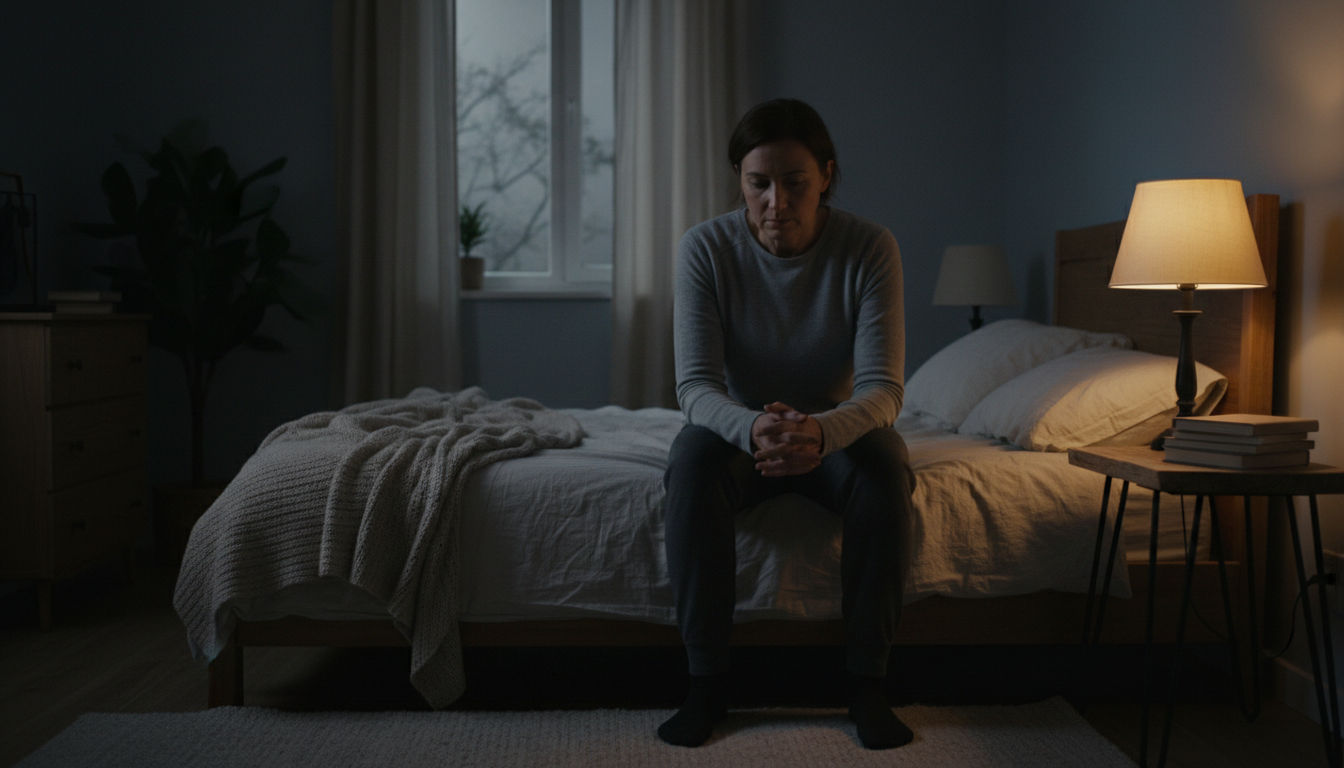
Why anxiety can feel worse at night
During the day, the mind has tasks to hold onto. Work, caring roles, travel, messages, meals, errands and conversations all take up space. Even when anxiety is present, attention keeps moving.
At night, that changes. There is less noise, less structure and less to do. The mind can turn towards unfinished thoughts.
Common night-time patterns include:
- replaying conversations from the day
- worrying about tomorrow
- checking physical sensations, such as a tight chest or fast heartbeat
- feeling lonely or exposed in the dark
- fearing that poor sleep will ruin the next day
This does not mean the worries are more true at night. It often means there are fewer distractions from them.
Night-time anxiety can also be strengthened by the body’s normal evening state. Tiredness can reduce patience and perspective. A worry that felt manageable at 2 pm may feel much heavier at 11 pm. The brain is trying to solve problems at the very time it needs to rest.
There is also a pattern many people recognise, even if they have never named it. The bed becomes linked with thinking, scanning and bracing. After enough difficult nights, simply getting into bed can trigger anxiety because the mind has learned, “This is where we struggle.”
Why you may wake up anxious
Waking with anxiety can feel confusing because it seems to arrive before thought. Some people describe it as opening their eyes and already feeling dread.
There are several possible reasons for this.
Sleep is not a blank space. The mind keeps processing emotions, memories and concerns. If stress has been building, waking can bring it back quickly, sometimes before there is a clear thought attached to it.
The early morning can also be a vulnerable time because the day is still unknown. A person may wake and immediately scan for what might go wrong. The mind starts planning, predicting and protecting.
This can sound like:
“What have I forgotten?”
“How will I get through today?”
“Why do I feel like this again?”
“What if this never settles?”
The body may also wake in a state of readiness. A faster heartbeat, tension in the stomach or shallow breathing can be interpreted as danger. Then the mind looks for a reason, and worry fills the gap.

For some, mornings carry a sense of pressure. There may be school runs, work demands, caring responsibilities, money worries or relationship strain. The body learns that waking means entering pressure, so anxiety appears early.
This does not mean you are weak. It means your system may have been on alert for too long.
What anxiety is trying to do
Anxiety is uncomfortable, but it is not random. At its simplest, anxiety is the mind and body preparing for threat. It tries to protect, predict and prevent harm.
The difficulty comes when that protective system becomes overactive. A late reply, a strange body sensation, a busy week or a difficult memory may all be treated as danger. The mind then pushes for certainty.
It asks questions that rarely have peaceful answers:
- “What if something bad happens?”
- “What if I cannot cope?”
- “What if people notice?”
- “What if this feeling gets worse?”
The lived experience of anxiety is often a mix of fear, frustration and exhaustion. Many people know their thoughts are extreme, but still feel caught in them. This gap between “I know this may not be logical” and “I still feel scared” can be deeply distressing.
Therapy often helps by slowing this process down. It gives room to notice what triggers anxiety, what keeps it going and what might help the body and mind feel safer.
What may help in the moment
Managing anxiety at night or on waking is rarely about finding one perfect technique. It is more often about building small, repeatable habits that teach the body it does not need to stay on high alert.
Helpful steps can include:
- Name what is happening
Try, “This is anxiety. It feels intense, but it is a state my body is in.”
- Lower the demand to solve everything
Night is usually a poor time for life planning. If a worry matters, write it down and return to it in daylight.
- Use steady breathing
Slow the out-breath. This can help signal to the body that there is no immediate danger.
- Keep mornings gentle where possible
Avoid reaching straight for messages or news. Begin with light, water, movement or a simple routine.
- Reduce checking
Repeatedly checking sleep, symptoms or possible problems can make anxiety stronger. Try to notice the urge without obeying it every time.
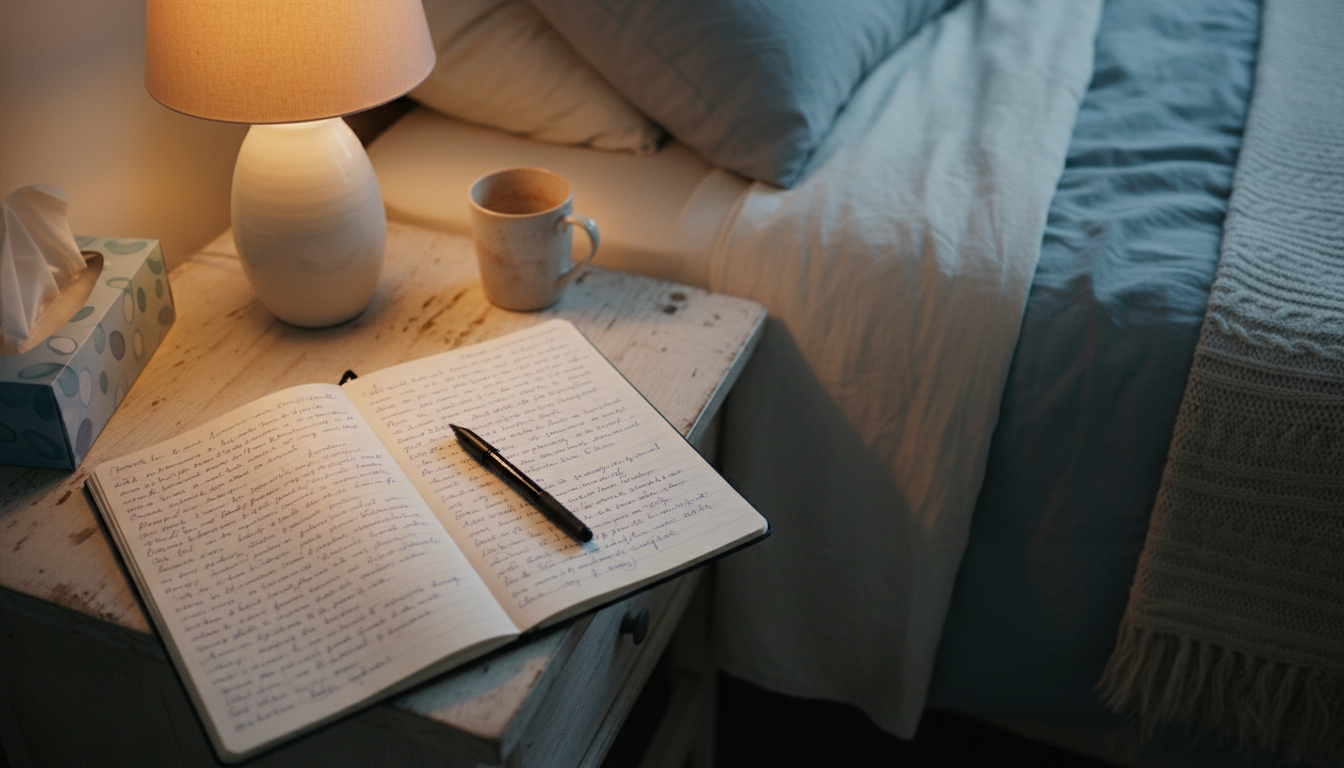
These steps are not a cure for every form of anxiety. They are ways to create steadier conditions. If anxiety has taken hold for a long time, support from a psychologist can make the work more focused and less lonely.
When it is time to see a psychologist
Many people wait until anxiety feels unbearable before seeking help. Therapy can be useful much earlier than that.
It may be time to see a psychologist if anxiety is:
- affecting sleep most nights
- making mornings feel frightening or unmanageable
- leading you to avoid work, study, relationships or ordinary tasks
- causing repeated panic or intense physical fear
- making you seek reassurance again and again
- linked with painful memories or ongoing stress
- leaving you exhausted, irritable or unlike yourself
- causing thoughts that life feels hopeless or unsafe
If there is any immediate risk of harm, seek urgent help. In the UK, you can contact emergency services, call NHS 111, speak to a GP, or contact Samaritans on 116 123.
A psychologist can help make sense of both the pattern and the meaning of anxiety. That may include looking at current stress, past experiences, beliefs about responsibility, fear of judgement, perfectionism, grief or long periods of pressure.
Therapy is not only about reducing symptoms. It can also help rebuild trust in yourself. For people who cannot attend in person, online therapy may offer a practical way to start, especially when travel, location or scheduling makes face-to-face sessions difficult.
A good time to begin therapy is not only when things have collapsed. It is also when you notice the same distressing cycle repeating and feel ready to understand it with support.
Anxiety at night and on waking can feel personal, confusing and frightening. Yet these patterns often make sense when seen through the lens of stress, threat, habit and unmet emotional needs. The aim is not to force anxiety away, but to learn what it is responding to and build a steadier relationship with your mind and body.
If anxiety is narrowing your life, disturbing your sleep or making each day feel harder than it should, that is enough reason to seek help. You do not need to prove that things are “bad enough” before starting therapy.
Starting therapy with a psychologist in the UK
Dr Kayleigh Darch is a HCPC-registered Clinical Psychologist offering safe, supportive and effective online therapy to people living in Devon and across the UK. If you're considering therapy, then you might like to find out more about: online therapy, the therapeutic approach, and Kayleigh's background and skills.
If you're interested in working with Kayleigh, get in touch to start the process today. You can book a free 15-minute consultation to talk about how you might work together and what you hope to achieve in therapy.
If you're experiencing anxiety, then you might find our guide to the phases of anxiety useful and top tips for grounding techniques to reduce anxiety.
Thank you for reading.