Finding a psychologist in Devon can be harder than it should be. Provision is concentrated around Exeter and Plymouth, waiting lists vary considerably between areas, and if you live in Barnstaple, Okehampton or on the coast, the nearest consulting room may be an hour's drive each way.
This article sets out the routes available in Exeter and across Devon — NHS and private — where to look, what to check, and how online sessions have changed the picture for people outside the cities.
Explore sections:
- The NHS route in Devon
- The private route
- Where to search
- What to look for in a Devon psychologist
- Does it matter if they are local?
- If you are outside Exeter
- Questions for the first call
- Starting therapy with a psychologist in Devon

The NHS route in Devon
There are two main NHS entry points, and they are different services.
NHS Talking Therapies (formerly IAPT) covers anxiety and depression in adults. In Devon this service is called TalkWorks, and you can refer yourself to it directly — no GP appointment is needed. Support ranges from guided self-help to CBT. It is free, and waiting times depend on the type of therapy and where you live.
Community mental health teams, run by Devon Partnership NHS Trust, cover more complex or severe difficulties. Access is normally through your GP, who can make a referral for assessment.
Your GP is the right first stop if you are unsure which applies, if medication may be relevant, or if things feel urgent. If you are in crisis, the Devon 24/7 NHS mental health helpline is reachable through NHS 111 by choosing the mental health option, and Samaritans are free on 116 123 at any hour.
NHS provision is genuinely good, and free. The main constraints are waiting times and the number of sessions available, which is why many people look privately alongside or after it.
The private route
Going privately means you choose the practitioner, you usually start within weeks rather than months, and the number of sessions is decided clinically rather than by service capacity.
It also means paying — either directly or through health insurance. Our articles on what private therapy costs and using health insurance cover that side in detail.
Where to search
Four places are worth your time:
- The HCPC register — the definitive list of practitioner psychologists in the UK. You can search by location, and anyone not on it cannot lawfully call themselves a Clinical Psychologist.
- The BPS Directory of Chartered Psychologists — searchable by area and specialism. Worth knowing that this one works differently: the British Psychological Society is a membership body rather than a regulator, so being listed is a voluntary choice rather than a legal requirement. Its absence tells you nothing; the HCPC register is the check that matters.
- Psychology Today — profiles filterable by location, difficulty and fee, with registration verified by the site.
- Your GP practice — many keep a list of local private practitioners they know of.
Directories that let anyone list themselves without a registration check are best treated with caution. Whatever the source, verify the registration yourself; it takes a minute.
What to look for in a Devon psychologist
Beyond registration, a few things matter more than they might appear:
The right kind of experience. Ask whether they regularly work with what you are bringing. Anxiety, trauma, burnout and low mood all call on different skills, and honest practitioners will say when something is outside their area.
A clear approach. A psychologist should be able to explain, in ordinary language, how they work and what the first few sessions would involve. If the explanation is vague or heavy with jargon, that is worth noticing.
Practical fit. Availability that matches your working life, a clear fee, a stated cancellation policy. Small things that determine whether therapy is sustainable over several months.
How the first contact feels. The relationship between you and your therapist is one of the strongest predictors of whether therapy helps — more on why that is. You are allowed to speak to two or three people before choosing.
Does it matter if they are local?
Since most therapy in Devon now happens online, this question comes up often.
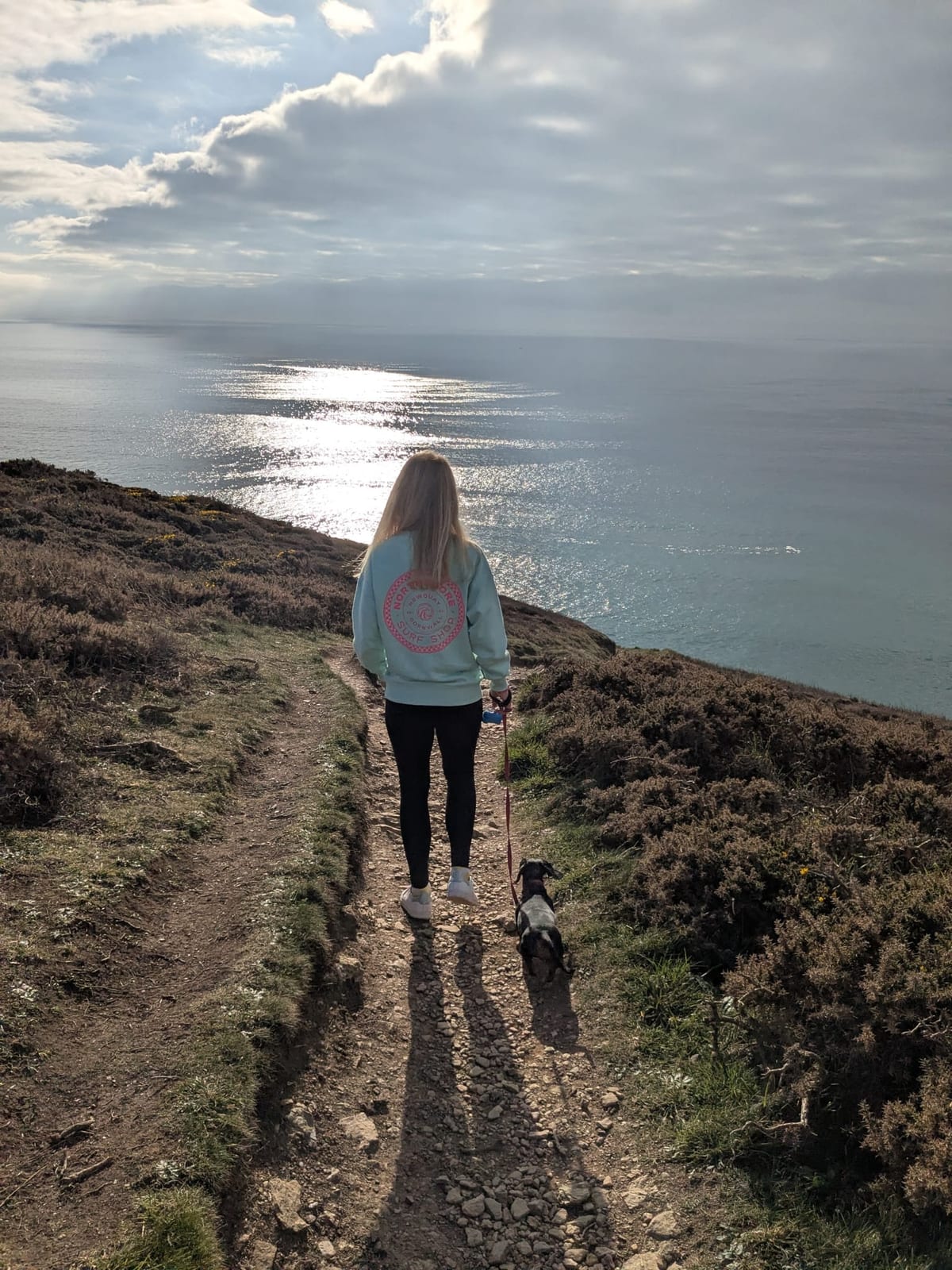
A local psychologist brings context. They know Devon's NHS pathways and how to navigate them. They understand the pressures that come with the region — seasonal and tourism work, agriculture, the isolation that rural and coastal living can carry, the distances involved in getting anywhere, the housing pressure around Exeter. You spend less time explaining the backdrop and more time on what you came for.
What matters rather less is whether they are physically near you, because the sessions themselves are online. Being Devon-based and working online is a combination rather than a compromise: local knowledge without the drive.
If you are outside Exeter
If you live in Plymouth, Torbay, Exmouth, Tiverton, Honiton, Crediton, Barnstaple, Bideford or one of the smaller places between them, online therapy changes what is realistically available to you.
Rather than choosing from whoever is within driving distance, you can choose from psychologists across the country and pick on the basis of specialism rather than postcode. For a weekly commitment over several months, removing a two-hour round trip is often the difference between therapy that continues and therapy that quietly stops.
The evidence on whether it works as well is covered in our article on online versus in-person therapy. In short: for most common difficulties, the outcomes are comparable.
What you do need is a private space and a reliable connection for the hour. For some people that is a room at home; for others it is a parked car, which is more common than you might think and works perfectly well.
Questions for the first call
Most psychologists offer a free introductory call. Worth asking:
- Do you regularly work with difficulties like mine?
- How do you work, and what would the first few sessions look like?
- What are your fees, and are you recognised by my insurer?
- When are you available, and how soon could we start?
- How will we know whether it is helping?
You are assessing them as much as they are assessing the fit. A good practitioner will expect that.
Starting therapy with a psychologist in Devon
Dr Kayleigh Darch is a HCPC-registered Clinical Psychologist based in Exeter, offering online therapy to people across Devon and the wider UK. She has previously worked alongside NHS primary and secondary care mental health teams in Devon, including with the University of Exeter and CoLab — so the local landscape is familiar ground.
You might like to read more about psychological therapy in Exeter and Devon, the therapeutic approach, or Kayleigh's background and training. Alongside therapy, she also offers trauma-informed yoga in Exeter and wellbeing programmes for organisations across Devon.
When you are ready, get in touch to arrange a free 15-minute introductory call.
If you need help urgently, contact your GP, call NHS 111 and choose the mental health option, or call Samaritans free on 116 123. In an emergency, call 999.
Thank you for reading.